

Welcome to the Machine
Wine spent 20 years optimizing administration. AI may force it back toward humanity.

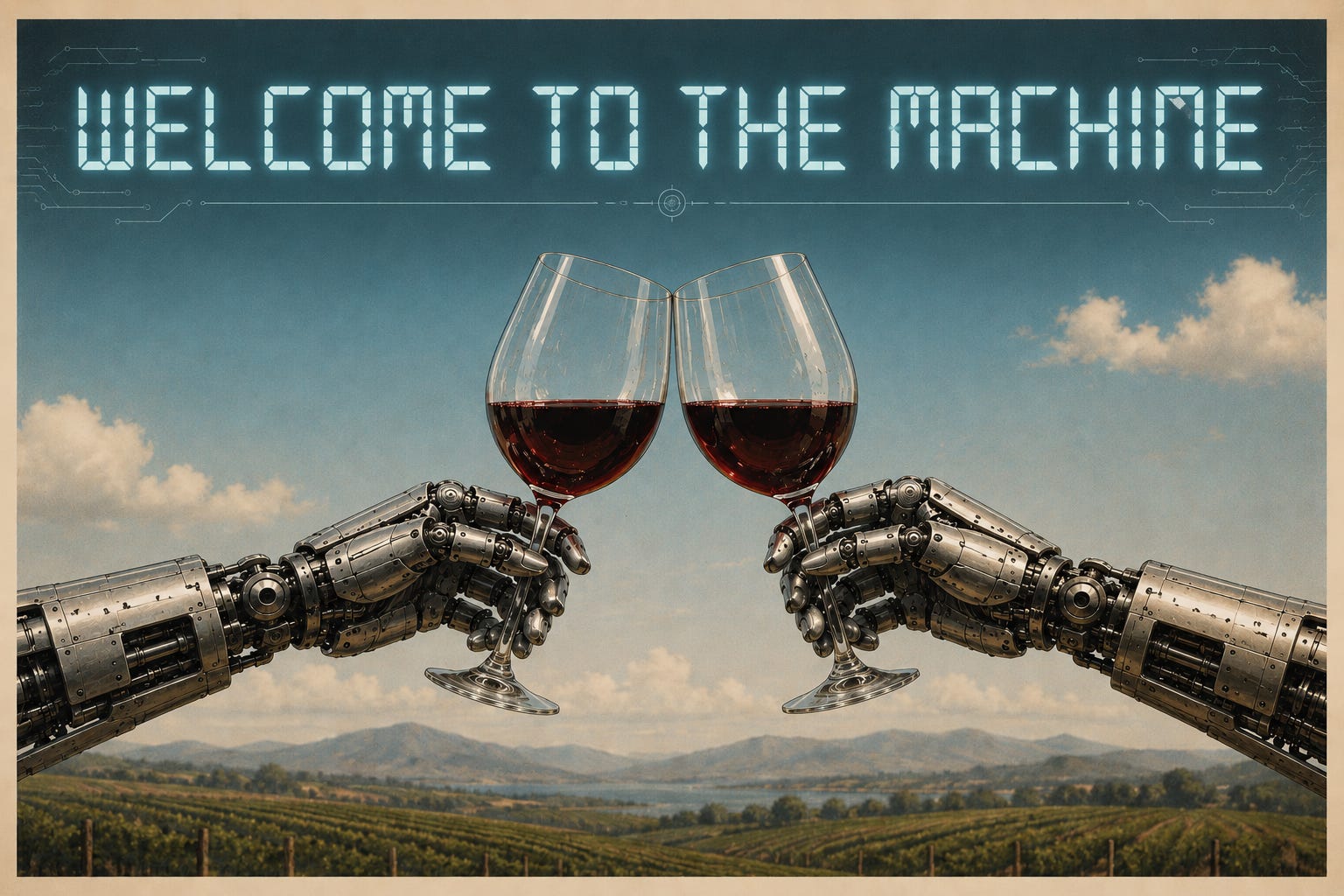
The wine business is about to change really, really fast.
The wine business has developed a curious habit of congratulating itself for rethinking wine, as though the wine itself were somehow the problem, or as though Cabernet, Chardonnay, Champagne, Burgundy, Barolo, Rioja, Riesling, and the rest of civilization’s long conversation with fermented grapes were just sitting around, patiently waiting for a conference panel to make them relevant again.
Wine does not need to be reinvented. Wine is fine right where it is. What needs to change is us: a business model built on administrative clutter, inherited assumptions, and the increasingly desperate belief that the future can be managed into existence through branding exercises. It cannot. The future will create itself, as it always does. Our only real question is whether we become durable, honest, and awake enough to recognize it when it arrives. Right now, we probably have less than 24 months to understand what is happening.
Today, right after reading yet another press release about one company’s software integrating with another’s software to reveal insights into its own customers’ behavior, I happened across an article on Naval Ravikant’s recent observation that struck me as profoundly important, not simply for technology but for the broader wine business. His point was not that software will disappear, but that software loses scarcity. The interface, the dashboard, or the reporting layer, the CRM, the analytics package, and the workflow engine, all of it becomes easier and cheaper to reproduce once AI can write software, then operate that software, and increasingly connect software together on behalf of us slow-thinking humans.
That matters enormously because the wine business, like all mature industries, spent the better part of the last twenty years mistaking infrastructure for an advantage. The point is that the “moat” shifts away from the software itself and towards the things AI cannot easily replicate, or at all: trust, identity, relationships, operational fluency, wine’s cultural relevance, distribution, consistency of the narrative, and, of course, community. In many ways, this maps almost perfectly onto the underlying problems we’ve already recognized inside the wine business long, long before anyone uttered the phrase “artificial intelligence” for the first time.
A Spreadsheet Ate My Winery
For decades now, wineries believed that owning the product was the business. Then, the distribution became the business. Then, direct-to-consumer and its related software became the business. Then came club systems, reservation engines, CRM stacks, automated emails, “customer journey”, ecommerce integrations, inventory platforms, compliance (!) middleware, and endless layers of administrative tech promising us a modicum of insight, efficiency, and growth. Somewhere along the way, I wonder if we began confusing the accumulation of systems with the creation of value. What were we trying to accomplish with all of this? The answer is more business, surely. Presumably, software, in and of itself, was not the value. At best, it was organized administration.
And wine, perhaps more than most businesses, became astonishingly dependent upon administrative labor dressed up as sophistication. Artifacts of old laws, I suppose. Reports are exported from one system and manually reconciled against another. Excel is in there, somehow, inevitably. Inventory gets stitched together through tribal knowledge. Compliance is managed through institutional memory and high anxiety. Marketing calendars are assembled by a committee. Customer behavior was interpreted through fragmented dashboards that almost nobody fully trusted or believed in the first place. This is not an abstract theory. We lived this. This is not integration, and complexity is not the moat. What we built was a choreography. And choreography becomes fragile the moment the music changes. This model does not survive AI’s evolution. No way.
The real disruption is arriving now, and it isn’t that AI will build better dashboards. It is highly possible that the dashboard itself may eventually become unnecessary. Within a few years, many winery employees will spend less time operating software directly and more time instructing orchestration systems that sit above software altogether. “Show me which club members are most likely to lapse.” “Rewrite this allocation offer for younger, more affluent buyers.” “Predict which wholesale placements are most likely to churn.” “File this month’s shipping reports and pay my Missouri taxes.” “Summarize underperforming SKUs in Safeway in Southern California.” “Build a recovery campaign for weather-delayed shipments in Texas.” A lot of this is already in the works at New Vintage Labs, right here in Napa, just as one example. Take a look.
The human stops navigating software. The AI navigates software on behalf of the human. We may not even remember what it used to be like.
That is the real collapse (although that word is unfair to the future) Naval is pointing toward, and I suspect many people still underestimate how quickly it arrives once AI begins removing many of the spokes from the wheel and integrating the mundane to the mechanical.
To their credit, some people in the wine industry saw pieces of this coming earlier than others. We must seriously admire what Andrew Kamphuis built at Commerce7 because the insight was never merely about e-commerce. It was recognized that the future value of wineries increasingly lived inside customer continuity, communication, allocation logic, CRM, and identity. Likewise, Tyson Caly, Byron Hoffman, and the team at Offset Partners understood that wineries did not simply need more software features. They needed stronger, more fluid connective tissue between the winery and the customer, leveraging an elevated aesthetic and highly specialized custom tools that sell expensive wines.
That is a far more durable insight than just “selling wine online.”
And frankly, this is where more generalized platforms begin to feel oddly clumsy for wine, despite their obvious brilliance and massive scale. Wine is not merely e-commerce. It carries allocation psychology, hospitality, regional legality and compliance complexity, emotional purchasing behavior, long-memory customer relationships, vintage variation, ritual, and identity. It is less about the abandoned cart and more about, as you know, membership and belonging wrapped around a physical product.
Your Website Is About to Become Source Material
Which is precisely why the next part becomes so important. The consumer may not interact with winery websites directly much longer anyway. Not just eventually. Soon.
Within two or three years, affluent consumers will increasingly discover wine through AI intermediaries, whether that’s their dining AI, their gifting AI, or their travel AI. It is already becoming an algorithmic concierge. Let’s not pretend you haven’t already traded your SEO budget for GEO. If you haven’t, you will.
Consumers will not browse endlessly through winery websites comparing tasting notes and shipping offers any more than they still browse through travel brochures or newspaper classified ads. They will simply ask: “Find me a Napa Cabernet similar to Dunn Howell Mountain under $125.” “Which wineries offer the best view, with food, allow dogs, and have a cave tour?” “Which wine clubs are genuinely worth joining, and why?” “Which legacy producers still feel culturally relevant?” Or even, “Which winery donated to (insert name of political party here)?”
And the AI layer will answer before the consumer ever reaches your website. Your website increasingly becomes source material for the machine rather than destination material for the consumer. An encyclopedia for its reference, not necessarily for the consumers.
Friction Used to Protect Us
Of course, the wine business has always been unusually slow to adopt new technology, often proudly so. Ours is an industry deeply romantic about continuity, ritual, and craftsmanship, which are beautiful qualities right up until they become excuses for inertia. Many wineries will resist AI instinctively because it feels clinical, impersonal, or philosophically incompatible with the culture of wine itself.
But the market will not wait for the industry to become emotionally comfortable with AI. Consumers, retailers, logistics providers, search platforms, and competitors will adopt these systems globally and asymmetrically. The danger is not that wine changes too quickly. The danger is that the rest of the business world changes quickly, while wine mistakes its hesitation for preservation.
That prediction matters because it completely changes the nature of competition in wine. The winery no longer competes primarily on real interface, package design, or even shelf position. It competes with relevance. It competes with memorability. It depends on whether humans or machines consider it worth mentioning in the first place.
I suspect at least half the serious marketing people in wine already feel this transition intuitively, even if they cannot yet fully articulate it. You can see it in the rise of founder visibility, educational content, podcasts, transparency, audience-building, and direct communication platforms like Substack. The old signaling systems are weakening quickly.
Expense Reports Masquerading as Narratives
“Tell them your story!”
Sorry, but “Billionaire buys winery” is not a story. “We spared no expense” is not a story. “Consulting winemaker with 100-point pedigree” is not a story either. Those are expense reports masquerading as narratives.
The uncomfortable truth is that most wineries do not have stories that emotionally resonate with consumers, or any story at all. They possess vineyards, architecture, consultants, and capital structures, like everyone else. But story is not biography. A story is supposed to have meaning. Historically, wine got away with weak communication because scarcity and distribution covered for it. Critics and wine writers covered for it. Restaurant placements and shelf sets covered for it. The consumer did not need to deeply understand the winery because the system itself created enough friction and enough mystique to sustain the unrelenting demand.
That story is over.
Nobody Owns Attention by Accident
Many of the next durable wineries will behave less like beverage manufacturers and more like membership-driven cultural institutions with agricultural roots. That is precisely why platforms like Substack (for example) matter so much. Substack is not merely marketing. It is direct cognitive ownership. Every essay you write compounds familiarity. Every post you put out there sharpens their worldview. Every interaction with you deepens trust. Every subscriber becomes incrementally better than just their email.
The winery is no longer simply waiting for purchase occasions. It is maintaining an ongoing dialogue, a relationship with attention itself. And that may ultimately become more valuable than a physical distribution footprint.
AI amplifies this rather than replacing it because AI destroys generic communication first. Average marketing is about to become effectively infinite, which means truly authentic positioning, a distinctive voice, and a genuine perspective (!!) become dramatically more valuable.
Product is Downstream of Marketing
This is why I increasingly believe something that would have sounded backward to the wine industry twenty years ago: Product is downstream of marketing.
Luxury and semi-luxury consumers frequently buy meaning before they buy utility. A Rolex does not primarily sell timekeeping. A Porsche Carrera does not primarily sell transportation. The object, surely you agree, becomes symbolic before it becomes functional. Wine people often resist this idea because they want to believe quality alone determines success. Quality matters enormously, of course. But in mature markets, quality eventually becomes table stakes. Meaning becomes the differentiator.
I confess I am not entirely comfortable with this myself. As someone who still believes deeply in terroir, expression, and craftsmanship, I would prefer meaning to reside entirely in the wine. But mature markets rarely work that way for long, and that creates the real danger facing wine(ries).
A winery with no voice, no worldview, no audience, and no community increasingly risk becoming interchangeable inventory inside an AI-mediated marketplace. Not bad wine. Irrelevant wine. I used to say that after 1985, there were no more bad wines being made, just boring wines. Don’t be boring.
Even compliance fits into this broader transformation. The current compliance ecosystem remains astonishingly fragmented: state registrations, COLAs, excise taxes, carrier reporting, supplier filings, shipping rules, trade practice exposure, inventory reconciliation, fulfillment oversight, and endless layers of duplicated administrative processes. Entire businesses exist largely because the complexity has become too expensive for smaller operators to internalize. That’s the “moat.”
AI attacks precisely this kind of fragmentation.
The thoughtful wine technology companies of the future may not resemble SaaS companies at all. They may increasingly become integrated operational partners that orchestrate communication, logistics, compliance, forecasting, customer behavior, inventory, and administrative execution simultaneously across the winery.
And that changes leadership itself.
The winery executive of the last twenty or thirty years was often a portfolio manager, budget allocator, or channel negotiator. The winery executive emerging now may increasingly become a narrative strategist, community architect, AI systems operator, trust builder, and culture builder. Three years from now, the best winery leaders may spend less time managing software and far more time interpreting behavior, shaping identity, strengthening their audience, and making strategic decisions informed by AI-generated operational clarity.
Which is why the comfortable middle is collapsing in wine at exactly the same time the comfortable middle is collapsing in SaaS. Mediocrity survived because friction protected it. AI removes friction. And once friction disappears, wines are forced to compete much more directly on relevance and trust.
Scarce Humanity
The irony is extraordinary because AI may ultimately make wine MORE human, not less. Once automation begins to handle reporting, forecasting, workflows, compliance processing, inventory reconciliation, customer service triage, and basic marketing production, what remains is the part wine should always have been emphasizing in the first place: the hospitality, the ritual, conviviality and belonging, the magnificent culture, storytelling, the taste, and of course, the place.
In other words, the machine may force wine back toward its humanity.
Once the industry had buried itself beneath dashboards, software integrations, reporting layers, committee-built marketing plans, and endless operational complexity. We became obsessed with optimization because optimization was measurable. But the things consumers actually love about wine are not measured in these ways. It’s the memory of the person who opened the bottle, the trust in a producer, that warm feeling of belonging somewhere, or the romance of place. For me, it’s the ritual itself that I adore.
AI does not, and cannot, eliminate those things. If anything, it amplifies their importance because once marketing, logistics, administration, and content become effectively infinite, competence alone stops differentiating anyone. Efficiency becomes abundant. Generic communication becomes abundant. What becomes scarce is genuine human connection, authentic perspective, and emotional resonance. And scarcity, as the wine business should understand better than anyone, is where value begins. In an odd way, humanity’s economic value increases.
I Feel the Earth Move
By 2030, I suspect the most valuable wine companies in America may not be the wineries producing the most wine. They may be the wineries with the strongest direct audiences, the clearest identities, the most trusted founder communication, and the deepest reservoirs of recurring customer attention. The future winery may look less like a manufacturing company and more like a media company, a hospitality company, a membership organization, and a cultural institution that happens to produce wine.
There is a real-world example of this, clearly, if you look at the sale of Shrader to Constellation back in 2017 for (are you sitting down?) $60 million. Shrader sold only its brand and contracts. It produced only about 2,500 cases of wine a year. It had no brick-and-mortar winery and not a single stick of vineyard. In retrospect, all you ever needed to know about the future was in that transaction. The mailing list, your relationships, is the gold dust.
This is where much of the current industry commentary starts to feel insufficient.
We have entered a predictable season of essays about how Napa changed, how the consumer changed, how hospitality changed, how younger people are not behaving as expected, how marketing needs to improve, how tasting rooms need to become more welcoming, how luxury needs to be rethought, and how brands need to tell better stories. Some of this is true enough, in the way that noticing smoke from the roof may indicate there is a fire somewhere inside the house. But much of it is already behind the moment.
The problem is not that wineries fail to post enough lifestyle photography on Instagram, hire the right agency, refresh the leather-bound tasting menu, soften the price points, modernize the website, or finally discover authenticity in the eleventh hour before the business becomes uncomfortable. No, it’s the ground beneath the business that is moving, and much of the commentary about “what Napa should do next” isn’t getting to the crux of the matter.
The next shock will not be another round of soft tasting room traffic, distributor consolidations, etc., etc., and whatnot. Those are real, and they matter, but they are not the whole story at all. The next shock is that artificial intelligence will begin removing friction from the wine business itself. It will remove friction from discovery, compliance, software, administration, customer targeting, content production, comparison shopping, reservation planning, gifting, logistics, retention, and eventually from the consumer’s entire path to purchase. That is an order-of-magnitude difference in change.
So yes, the market changed, and we did not. Got it. Fair enough. That sentence has been written many times now, and it has become less interesting with each repetition. The more important point is that the market is about to change again, far more quickly, and in ways that will make today’s complaints seem quaint by comparison.
Within five years, some wineries with excellent vineyards, beautiful hospitality spaces, respected winemaking teams, and objectively high-quality wine will fail because they never learned how to become cognitively relevant to modern consumers. Not because the wine was poor, or boring, but because their relationships were weak.
Meanwhile, smaller wineries with sharper identities, stronger communication, loyal communities, and more durable audience ownership will survive conditions that would have destroyed larger competitors a generation ago.
The industry keeps asking what kind of marketing will save wine. In a world where both man and machine have endless alternatives, that is the wrong question. The better question is whether a winery has earned enough relevance to be remembered, recommended, and repeated. The future is not waiting politely for the next banking report, conference panel, or solemn meditation on what went wrong in Napa, and everywhere else. It is already moving. And I suspect the next five years will be extraordinarily unkind to businesses that were built for a world where friction insulated them.
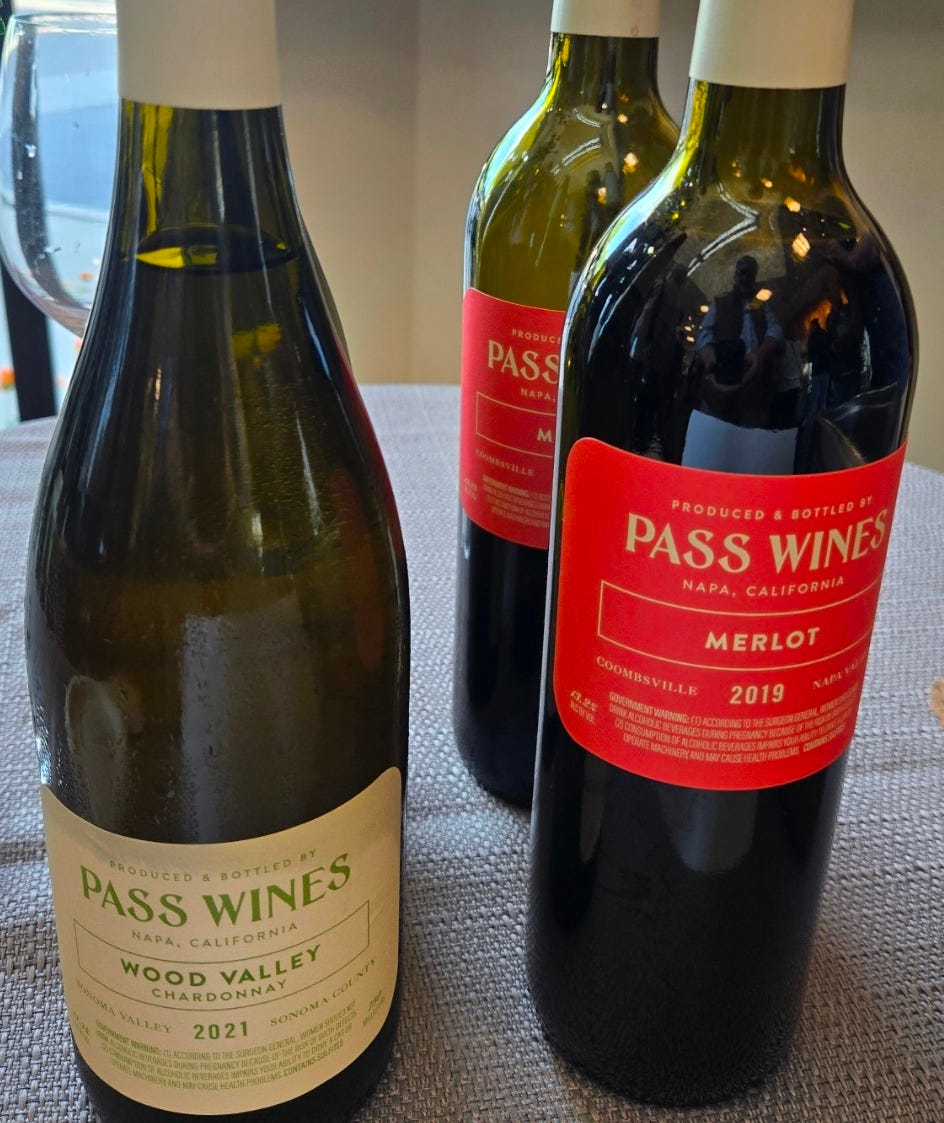
I haven’t had time to get into too many wine reviews and pictures and all that this week, but I did highly enjoy some Pass Wines (www.passwines.com), which were very complex, elegantly structured, and showed a lot of great terroir-driven aromas and flavors. I would really recommend them, but they are assuredly hard to find. Terrific winemaker.
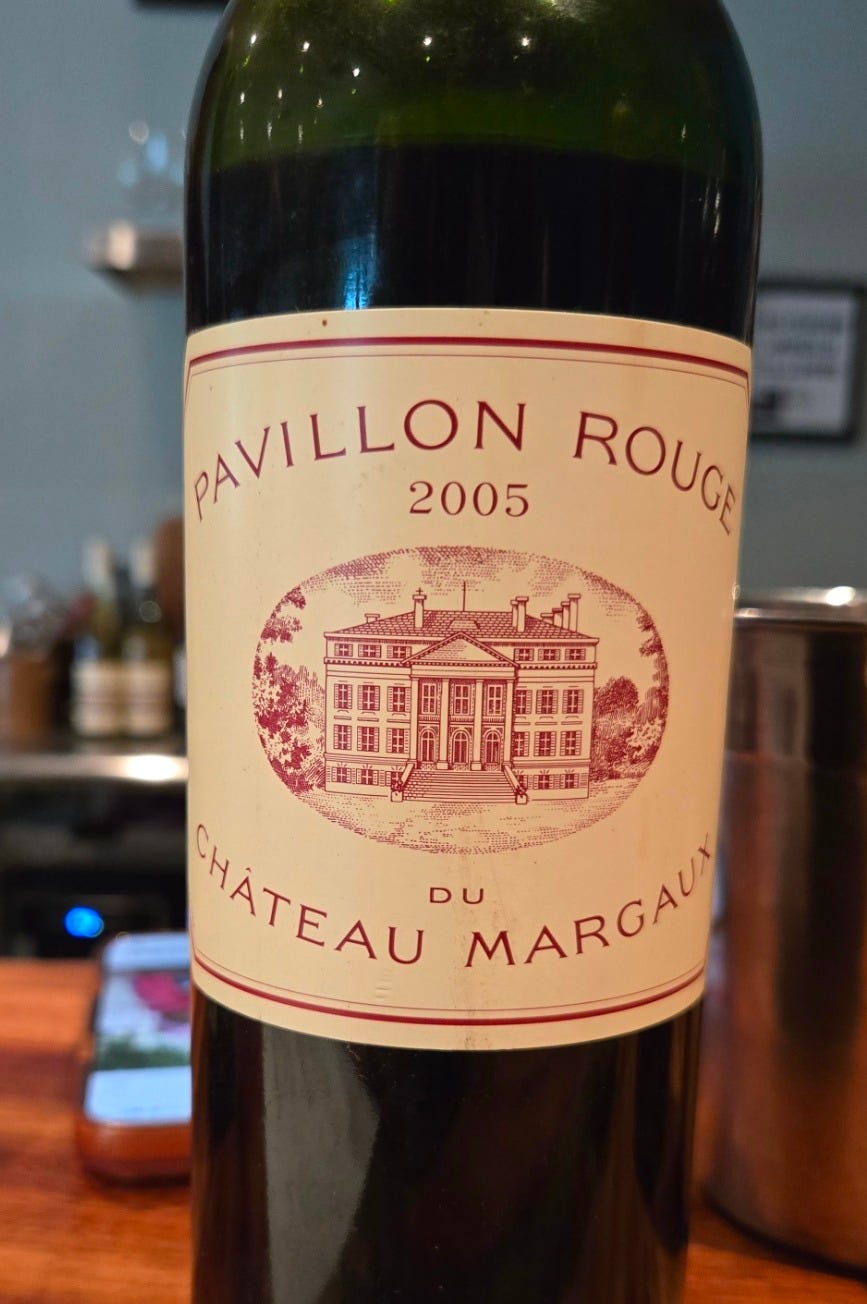
I was also lucky enough to enjoy some older wines, including a 2005 Pavilion Rouge de Chateau Margaux, which was, in a word, awesome. Perfect balance, aged appropriately, and extraordinary complexity in both the nose and on the palate. I was tasting this with my friend Dan Dawson who runs terrific tasting groups and a wine club (check him out on Substack here:
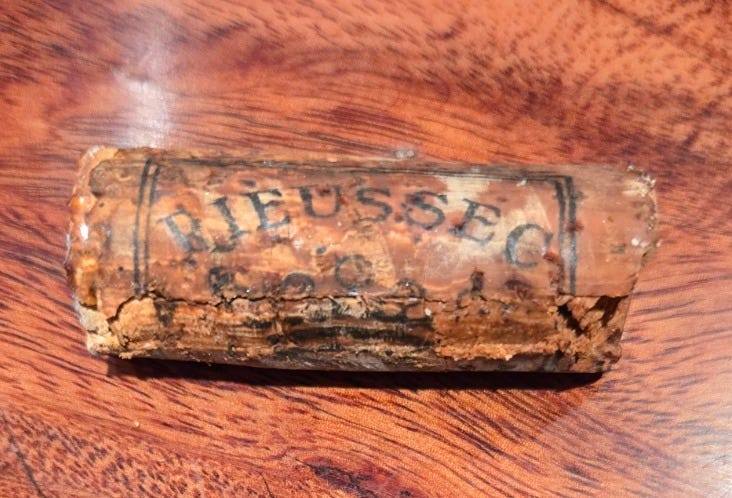
That same night, I was able to try a 1971 Chateau Rieussec Sauternes, which was, incredibly, in perfect condition. Utterly fabulous wine you almost never see around much, which is a terrible shame. I adore Sauternes, but the occasions are so few, you have to invent them.
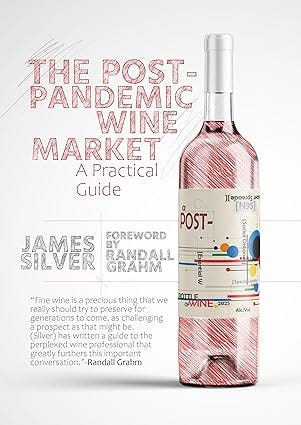
Jim Silver is a sales and operations consultant at Napa Valley Consulting, where he works with wineries on DTC and wholesale strategy, sales and marketing structure, and operational growth. He is the author of The Post-Pandemic Wine Market (2025).
Great articles with very good and optimistic (from my point of view) insights. We are so ready to go from big corporation back to small family wineries. Ones that really care about welcoming people into their tasting rooms and clubs. Ones that are looking at new generation and how to get younger people into wine more carefully rather then dismissing them.
This right here > “Billionaire buys winery” is not a story. “We spared no expense” is not a story. “Consulting winemaker with 100-point pedigree” is not a story either.
In your model, the winery website becomes not the end but a means. Machines need to be able to parse the details and find the humanity lurking in the digital content. AI is already eliminating copywriting jobs, but this idea argues for the opposite: find a human to tell a human story to train the machine to tell it.