

They Want to Grow
Why a soft market creates an unexpected equilibrium for overlooked AVAs

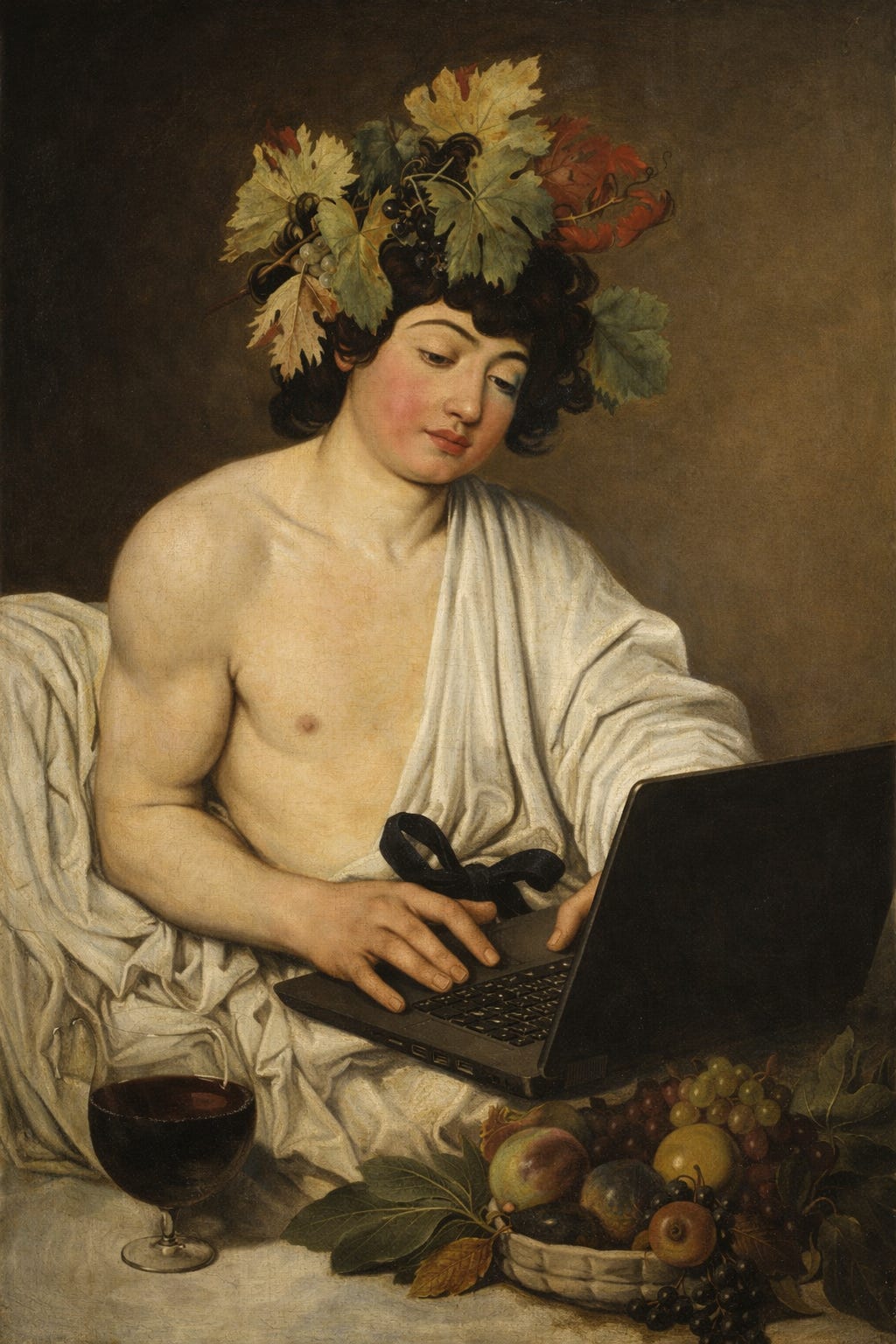
Recently, I began to wonder whether I had become a little too comfortable describing the wine business in such cautious terms.
That is perhaps the natural occupational hazard of spending too much time thinking about durability, margin discipline, slower growth, and all the ways wineries now need to survive in a market that no longer forgives so many easy assumptions. If you spend enough time examining contraction, you begin to hear yourself prescribing restraint almost automatically: fewer SKUs, cleaner inventories, lower expectations, better cash discipline, less movement for movement’s sake.
All of which, I still believe, remains sound advice for many wineries, perhaps most of them, and particularly those caught in the middle of the market, where pricing power is weak, distributors are inconsistent, and the old assumption of steady annual growth no longer carries much authority.
And yet over the past several days, I found myself encouraged by something I did not entirely anticipate: conviction. I am not so much changing my mind as recognizing that conviction and caution may now be arriving together.
I sat recently with a winery in Lake County, just over the Napa County border by a few miles, speaking in what I suppose has become my usual register—careful, measured, and perhaps slightly too aware of present risks. I suggested a conservative approach to growth. Move deliberately, resist the temptation to overextend, and let the market reveal itself before committing too heavily.
They listened politely and then, in essence, pushed back.
No, they said. We want to grow. We are prepared to invest. We believe the opportunity is here, and we want to meet it. Not recklessly or blindly, of course. But with genuine appetite.
The very next day, I had nearly the same conversation in Amador County. Again, I found myself making the case for focus: perhaps fewer SKUs, tighter positioning, clearer priorities, less complexity while the market remains uneven.
Again, the answer came back with almost identical energy: we understand the caution, but we want to lean in—stronger marketing, broader reach, a deliberate willingness to push harder rather than softer.
Then today, on Mount Veeder, speaking with a new Napa producer—one genuinely in love with the business, still in the formative stage, still building not merely a wine but an identity—I heard much the same thing once more. Confidence in quality. Confidence in the younger buyer, perhaps thirty-eight rather than fifty-eight or sixty-eight. Confidence that there remains room in the market for ambition if the wine is right, the message clear, and the belief sincere.
Three conversations, three different regions, three days in a row, all carrying some version of the same refusal to be governed entirely by present caution. I admit, I found it invigorating. Restorative, even.
Because while my own prescription of endurance still stands, particularly for wineries already under pressure, it would be a mistake to conclude that caution must become the only respectable posture in wine. A market correction is not the same thing as a market without a future. There are still moments when investment makes sense, and perhaps more importantly, there are still people prepared to make it.
That matters, I think, because there is durability inherent in wine itself. Eight thousand years of history will not suddenly end in 2026.
And a business does not renew itself through caution alone. At some point, someone has to believe enough to plant more, build more, launch more, hire more, or expand—even when the evidence for doing so still feels incomplete.
The important distinction is that confidence today cannot look exactly as confidence looked ten or fifteen years ago. It has to be more selective, more economically aware, and less dependent on the aging assumption that any well-made wine will naturally find its audience if given enough time. But conviction itself remains essential, and I found something deeply healthy in hearing it expressed so plainly.
What also struck me is that two of those conversations took place not in Napa proper but in places that may legitimately hold some of the most interesting commercial potential in a softer market: Lake County and Amador County.
One of the less-discussed effects of a down market is that prestige often loses a little of its gravitational pull. Buyers may become more careful, but they do not stop wanting quality. They simply become less willing to pay the premium that fame once commanded without hesitation.
This is not unfamiliar in broader economic cycles. During periods of consumer pressure, economists have repeatedly observed that premium brands do not disappear, but the confidence surrounding their pricing begins to soften. McKinsey & Company noted during the last major recession that when consumers were pushed toward lower-priced alternatives, many discovered those alternatives performed better than expected, and a meaningful number never fully returned to previous buying habits even after conditions improved.
Trial, once forced, often leaves behind a new permission structure.
Wine probably behaves much the same way, though in its own particular way. A buyer who once automatically reached for the familiar appellation begins to ask: Is the premium still fully justified? Is the difference obvious enough? Is there another bottle nearby, geographically or stylistically, that now makes sense without giving up too much?
That is where secondary regions become more interesting, because a weaker market does not flatten hierarchy so much as narrow the distance between what is famous and what suddenly appears intelligently priced.
Take Cabernet Sauvignon, for instance. Napa fruit remains extraordinarily expensive, often exceeding $9,000 per ton on average in leading districts, and of course can climb far past that for named vineyards. Lake County Cabernet can sit closer to two or three thousand dollars per ton, often coming from sites close enough geographically—and even climatically—to participate in the broader North Coast quality conversation. Much of that fruit already disappears into wines bottled elsewhere, including Napa, which tells you something important: the quality has long been accepted; what has lagged is the full economic recognition of the appellation itself.
Lake County has always had quality—Sauvignon Blanc may be its clearest proof—but what it has not always had is timing.
And timing matters because slower markets like this one make gatekeepers a little less romantic and a little more practical. Retailers watch shelf turns more carefully. Sommeliers look harder for interesting wines they can hand-sell with confidence. Buyers who once accepted prestige pricing almost automatically begin looking for bottles capable of preserving seriousness without carrying the full tariff of reputation—or marketing.
Amador County works a bit differently, but the opportunity is equally real.
Amador does not sit beside Napa in the same way, but it carries another advantage: authenticity without luxury inflation. Old vines, elevation, serious terroir, historical authority in Zinfandel, and now increasing confidence across many other varieties, all with a directness of character that increasingly feels attractive when many wines at much higher prices are working overtime to explain their value.
A consumer hesitating over a ninety-dollar bottle may look very differently at a forty-dollar bottle from Amador if the wine feels confident, complete, and honest about what it is. That is not simply trading down. It is often a recalibration of what feels sufficient once price begins to matter more consciously. In this way, Lodi and Santa Cruz County can benefit too, creating openings that stronger markets often suppress. In prosperous periods, buyers pay for the reassurance of prestige almost without thinking. In uncertain periods, they begin comparing reassurance against real utility, and lesser-known regions benefit whenever they can offer both at once.
The important next step is to convert trial into habit before confidence returns elsewhere. Some buyers will always drift back toward prestige when conditions improve, but not all of them, and not automatically. Those who stay usually do so because the alternative did more than save money; it made enough sense to repeat.
Paso Robles, I think, has largely stopped apologizing for being a less expensive Napa and is beginning to think of itself as the world-class winemaking region it is. That may be a useful model for everyone.
Which may be why those conversations stayed with me more than I expected. What I heard in Lake County, in Amador, and again on Mt. Veeder was not optimism detached from reality, but confidence shaped by it. No one denies that the market is difficult, but there is a growing belief that difficulty and opportunity are not mutually exclusive.
Durability matters, and for many wineries it remains the first discipline. But wine has never renewed itself through caution alone. Every meaningful future in this business begins when someone looks at an uncertain market and decides it is still worthy of belief.
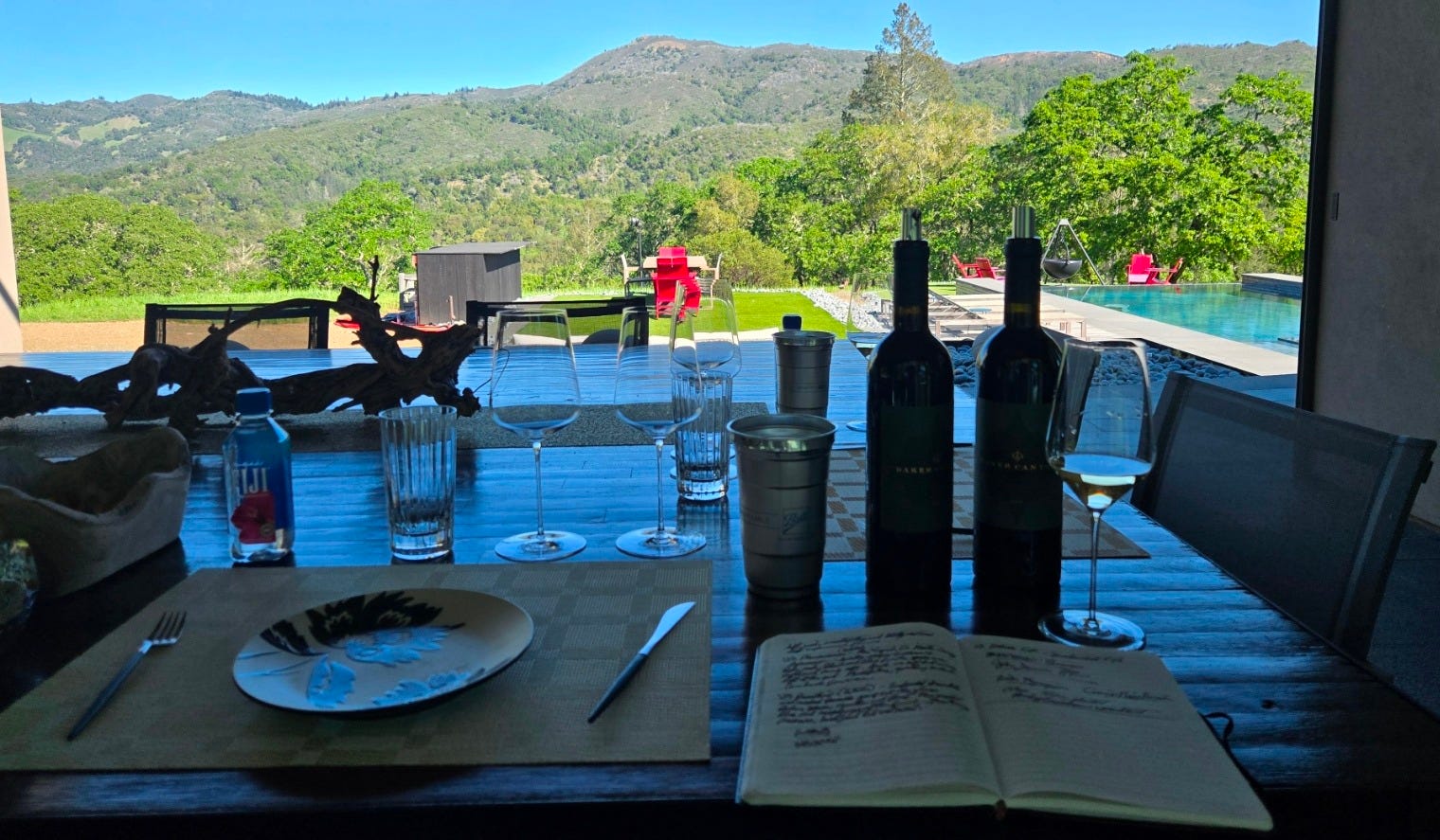
I’ll be the first to say, I take terrible pictures. I’ve got to up my game somehow. So I have to put this stock photo in so you can see the actual label…sorry.
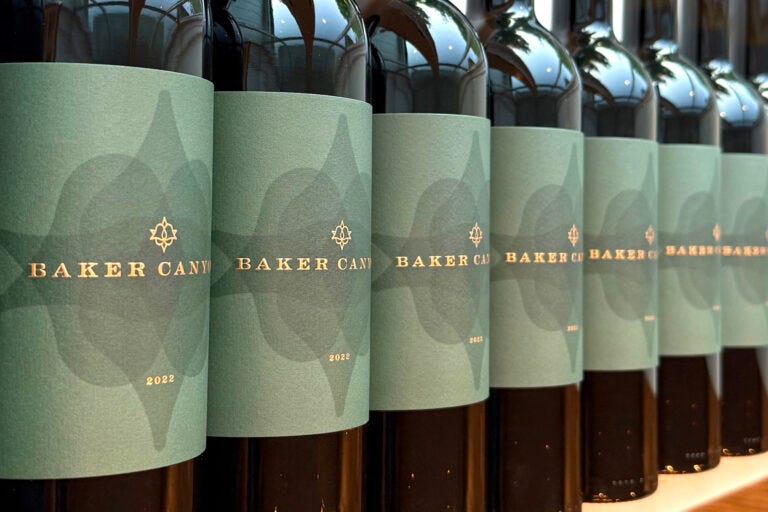
I was really honored to sit and chat with Basil Enan today. Basil is the owner of what will undeniably be one of your favorite Napa Cabernet producers of the future. With Andy Erickson guiding the winemaking behind the first releases of this label, expectations should be high. As a very big fan, personally, of Mt. Veeder terroir(s) I particularly enjoyed this talk and this preview. The Baker Canyon wines are named for the actual canyon about a thousand feet below Basil’s property on the mountain, where cattle are currently being run, and named for a long-time local large-animal veterinarian who owned the land. At present, the winery is under construction, with a commercial kitchen, and will feature a Bordeaux-grape vineyard, a little bit of Albarino, too. It is all very modern and beautiful, with stunning 360-degree views. I’m looking forward to its completion in 2028 or so. The Baker Canyon ‘23 vintage of Cabernet Sauvignon has already received a cool 96 points from Jeb Dunnuck, which I can also endorse, and is absolutely beautiful. I like the restraint, elegance, and the snapshot of Mt. Veeder terroir. It’s no shrinking flower, though, with some powerful and dark fruits, and a light hint of oak, but not too much of that. I think a little secret may be the ‘22, which features no oak at all, and some amphora aging. It drinks like a Napa Cab inspired by Clos Rougeard or Lapierre’s Morgon. (really) It’s a lovely wine. Basil himself seems inspired to create an honest and authentic experience for his customers. The kind of experience that is so rare these days, and that only the founder can provide, a real connection to the place and the product. Please take my word for it and visit Bakercanyon.com.
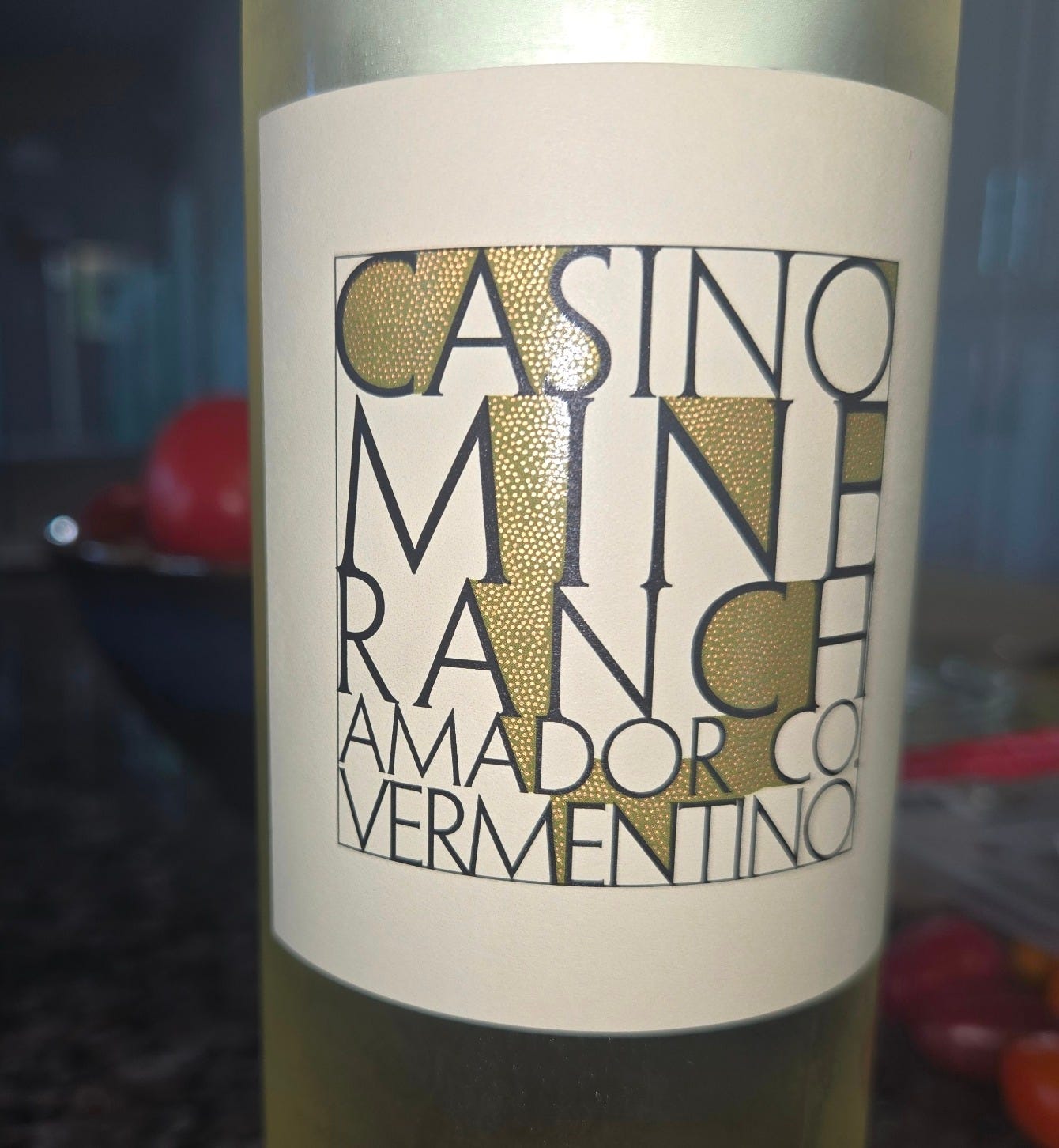
A while back, I wrote another in a series of lamentations about the business, and in that case, about Zinfandel. Of course, my experience is with the Amador County stalwart producer and grower Renwood, which is mothballed at the moment, but who knows what will happen? Let’s hope good things. As this article suggests, there are people in Amador who actually look forward, through all the smoke and noise, and see real potential. Driving on Shenandoah Road yesterday I was positively floored by how beautiful everything looked. It doesn’t hurt that the recent rains left things green and gorgeous, but I could really see why this stretch of Amador gives every region in the world a run for its money. Randall Grahm told me once, not out of context, but it surprised me nonetheless, that the Sierra Foothills had the best terroir in California. The ribbon-striped red volcanic soils with limestone make a candy-cane in a lot of places. Boulders are strewn everywhere from a Jurassic-era explosion. If only there was a little more water available, at least consistently. That said, thank God there are wineries like Casino Mine Ranch that build utterly beautiful tasting rooms and plant amazing varieties like Teraldego, Vermentino, Grenache Blanc, and so many others. With Andy Erickson consulting too, and such reasonable pricing, how can you not want to make your way out to Amador sometime soon and experience the new wave of Foothills wine? This 2023 Casino Mine Ranch Vermentino is just perfect. Saline, fresh, and mineral, with lemon-lime zippiness and crisp acidity. Get one, maybe two cases for the spring and summer, you will not regret it for a second. (I happen to love Vermentino, especially from Sardinia, and this is as good as any I have ever had.) Rich and Jim Merryman are those rare founders who will meet you at the winery, show you around, and let you in on the incredible history of the ranches and farms, there and in the area, the history of the gold mines and the pioneers who dug them, and foremost, why truly affordable luxuries just like this are so important right now for the future of our wine industry.
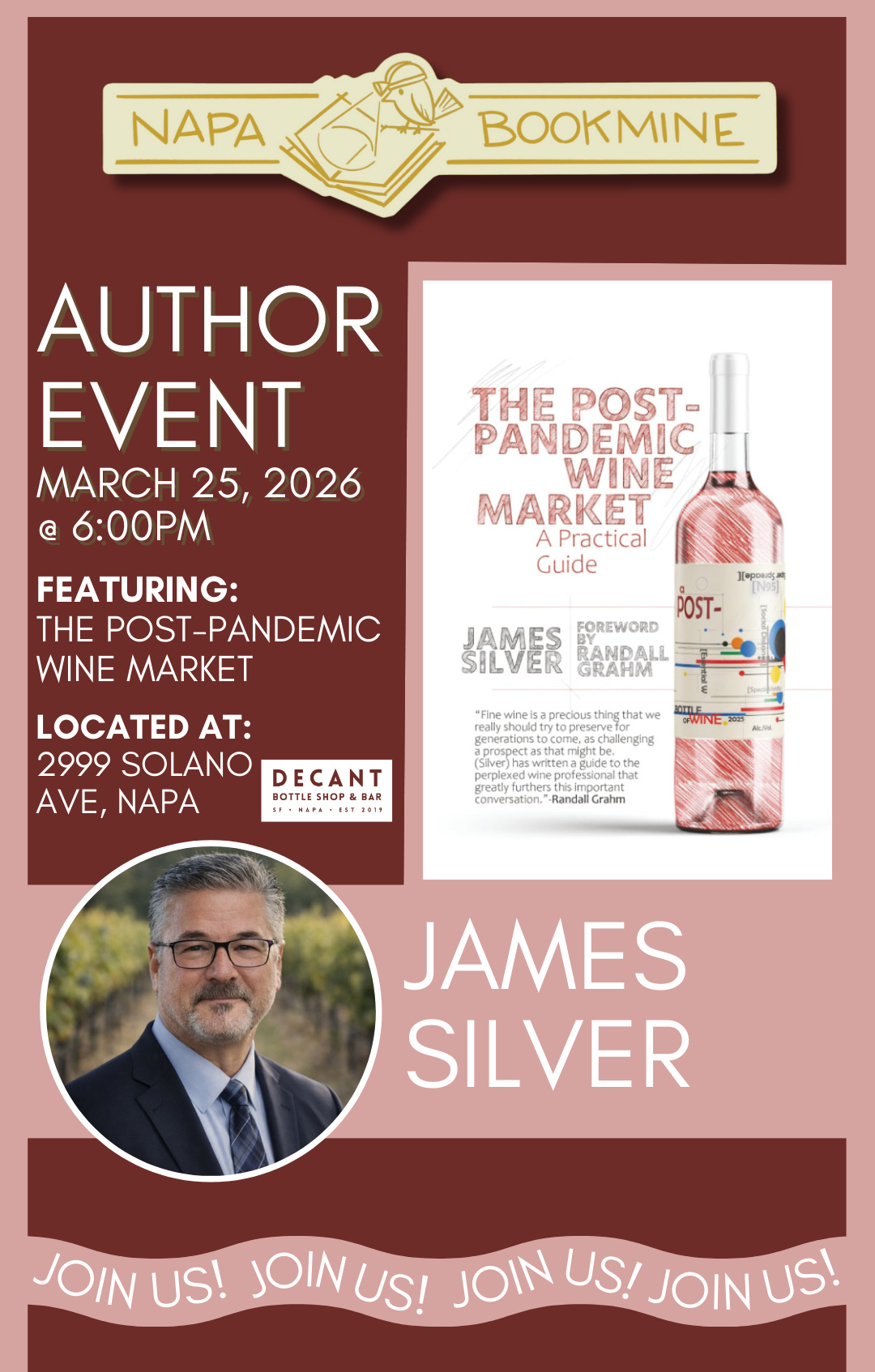
Lastly, come see me at Decant in Napa for a book reading and signing. March 25th at 6pm. It’ll be fun.
Thank you for sharing your thoughts as you experience them, Jim. I'm seeing similar things. While markets for grapes and wines from regions such as Lake County, Amador County and Napa Valley are definitely on the down side, there are almost amazingly some companies and individuals who are remarkably positive about it all. They see the down market as an opportunity. While most are selling, the bolder investors are buying. A handful of wineries are even reporting growth, even while most are reporting losses and setbacks.
This, of course, is typical of free market commerce, but it is opportunistic entrepreneurship that grew the domestic wine market in the first place; since the 1960s, a freakishly long period of steady growth up until just 4 years ago. It is why, in debates going on in forums such as LinkedIn, I cannot agree with the negative argument that the wine industry is "dead," or that we should prepare for death (especially by hiring marketing consultants who are the ones most eager to see the market die... so that they can be hired to do what they do, which is prattle on and on about their strategies, which I describe as "duh"). When asked, I say the industry is in a period of adjustment, which leaves lots of room for positive outlook on the part of entrepreneurs savvy enough to recognize the trends and plan accordingly.
I was in the computer and chip industries for over forty years and have been consulting on climate impacts and adaptation since 2011, primarily for wine producers these days. I experienced many cycles and while wine and chips are very different products there are some lessons that I believe apply to both. You can't win by retrenching. At best you survive in a weakened state. You need to understand your customers, and your competition, and invest thoughtfully in the future while others are pulling back, providing you with additional opportunity. It's been said that, "Great companies are built in tough times." And, raising prices while accepting lower volume is a slippery slope that the wine industry has been on for some time now. A good part of what we're seeing today is very likely the direct result of that.